
MineFinder acquires prospective mineral projects early, advances them to value-inflection points and brings in capable partners to fund major exploration.
By retaining project interests, royalties, milestone payments or equity, MineFinder creates several potential pathways to shareholder value-from technical de-risking and partner-funded drilling to discovery and project transactions.
MineFinder seeks to create value by securing prospective mineral projects early, strengthening their technical and commercial position, attracting partner capital and retaining economic exposure as successful projects advance.
Secure prospective projects before major exploration expenditure
MineFinder identifies and acquires copper and gold opportunities where existing evidence supports further investigation, but substantial value may remain unrecognised.
Convert geological potential into a credible, testable opportunity
MineFinder integrates field geology, historical exploration records, geophysics, geochemistry and AI-assisted analysis to improve the geological model and define clear exploration targets.
Use capable partners to fund larger exploration programs
Where appropriate, MineFinder seeks joint ventures, earn-in agreements or other partnerships to advance projects through drilling and further technical work.
MineFinder is building a portfolio of projects at different stages of technical development. Capital and management attention are concentrated on the opportunities with the strongest evidence, scale potential and commercial pathways.
Colossus is an intrusion-related system with historical copper and gold mineralisation, multiple structural corridors and several target positions that remain untested.
The value opportunity
Further definition of the mineralised system could establish its scale, strengthen priority targets and support focused drilling, partnership or transaction discussions.
Vulcan is a volcanic and carbonate-hosted system with historical sulphide drilling, established copper-zinc mineralisation and potential gold upside.
The value opportunity
Existing geological and drilling evidence provides a foundation for modern reinterpretation, target ranking and the definition of a credible program for further testing.
Valhalla is an epithermal gold system where mineralisation extends beneath shallow historical pits and along a broader structural corridor.
The value opportunity
Testing the depth and strike extensions of the known mineralisation could demonstrate that the system is materially larger than the historical workings indicate.
Titan is a structurally controlled gold project with numerous historical workings and modern evidence that mineralisation continues beneath the old mine positions.
The value opportunity
A modern geological model could define priority targets below known mineralisation and determine whether the historical workings form part of a larger gold system.
MineFinder’s portfolio only creates value if capital is directed towards projects that continue to justify further investment.
Every opportunity is assessed against four connected criteria: whether there is credible evidence of a mineral system, whether the potential discovery could be material, whether the geological thesis can be tested efficiently, and whether the commercial terms allow MineFinder to retain meaningful exposure to success.
Exploration is then undertaken in stages. Each program is designed to answer a defined geological question and determine whether the project should move forward. When the evidence strengthens, MineFinder may undertake further work, prepare the project for drilling or introduce a funding partner. When the evidence does not justify additional expenditure, the project may be deferred, restructured, partnered differently or removed from the portfolio.
This approach is intended to prevent shareholder capital from being absorbed by projects that remain technically interesting but commercially weak. It also allows MineFinder to seek partner funding before the most capital-intensive stages of exploration, reducing reliance on repeated equity raisings while preserving exposure to potential discovery.
Historical exploration, field observations, geochemistry and geophysics must support a coherent mineral-system interpretation. An attractive concept is not sufficient on its own.
The principal geological uncertainty must be capable of being resolved through a practical and staged exploration program. Each expenditure decision should lead to a clearer technical and commercial conclusion.
Ownership, acquisition terms, royalties, work commitments and potential transaction structures are considered before substantial capital is committed. Technical success must translate into retained economic value for shareholders.
A successful result must have the potential to create meaningful value for MineFinder and attract interest from credible exploration or mining partners.
MineFinder does not assume that every acquired project should be advanced indefinitely. Capital and management attention are concentrated on the opportunities where geological confidence, potential scale and commercial value continue to improve.
Mineral exploration can create substantial value when a discovery is made, but reaching that point is expensive and uncertain. When a company depends on a single project, shareholders may be required to fund successive exploration programs while the entire investment remains exposed to one geological outcome.
MineFinder is structured to approach that risk differently. The company builds a portfolio of copper and gold opportunities at relatively early stages, then applies disciplined technical work to determine which projects warrant further investment. Where larger exploration programs are required, MineFinder seeks capable partners to provide the capital and operating capacity needed to advance them.
Under these arrangements, MineFinder aims to retain meaningful economic exposure through project interests, royalties, milestone payments, equity or other transaction rights. This allows shareholders to participate in the value created through technical progress, partner-funded drilling, discovery or project transactions without MineFinder necessarily carrying the full cost of each program.
A portfolio does not remove geological risk, but it reduces dependence on a single asset and creates several potential sources of value. Some projects may be advanced internally, some may attract partners or buyers, and others may be discontinued when the evidence no longer supports further expenditure. The objective is to build a repeatable pipeline of opportunities rather than rely on one binary exploration result.
MineFinder seeks to use shareholder capital to create and improve opportunities, while bringing in partner capital for the most expensive stages of exploration.
MineFinder is structured around repeatable project generation rather than dependence on a single asset.
The team has experience originating, advancing and transacting mineral projects across copper and gold.
Projects may be advanced through drilling, joint ventures, asset transactions, royalties or retained equity.
Early technical work is focused on improving the project before larger amounts of capital are committed.
AI and data tools are used to improve analysis, target ranking and decision-making, with geological judgement remaining central.

Warwick is a mineral project generator with experience originating and advancing copper-gold and gold projects. His work includes the early creation of the Mt Chalmers copper-gold project, which is now being developed towards a mine by QMines, as well as projects progressed through targeting, drilling and transaction.
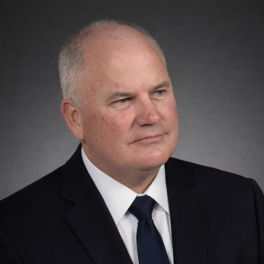
Dan has more than 20 years of experience across ASX, NASDAQ and TSXV companies, including public-company leadership, capital raising and resource-sector operations.
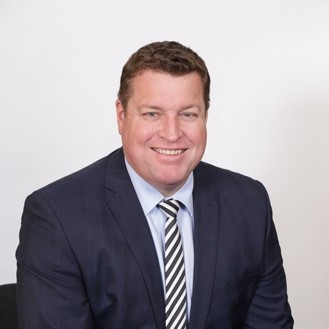
Justin is an Australian corporate lawyer and Chartered Company Secretary with extensive experience advising listed and unlisted companies on governance, transactions and public-market requirements.
MineFinder is assessing additional copper, gold and polymetallic projects across Australia.
New opportunities are reviewed for geological evidence, potential scale, acquisition terms and their ability to attract suitable exploration partners. Only projects that strengthen the portfolio are advanced.
Historical exploration, government datasets and regional geology are used to identify underexplored mineral systems.
Targets are assessed using geology, geophysics, geochemistry and AI-assisted analysis.
Ownership, royalties, access, work commitments and potential partner interest are considered before a project is acquired.
The strongest opportunities are secured and advanced. Projects that do not meet the required standard are rejected.